
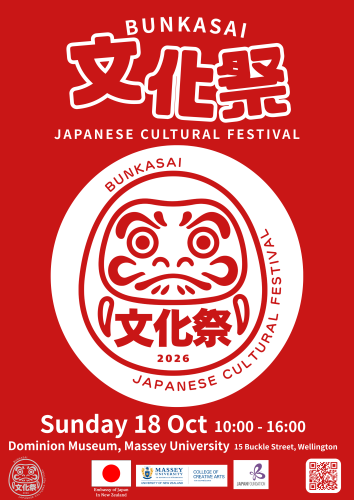
In Japan, a bunkasai is a school cultural festival where students come together to plan and run a wide variety of activities, performances, food stalls and exhibitions. It’s a much-loved tradition and a wonderful opportunity to celebrate creativity, community and Japanese culture.
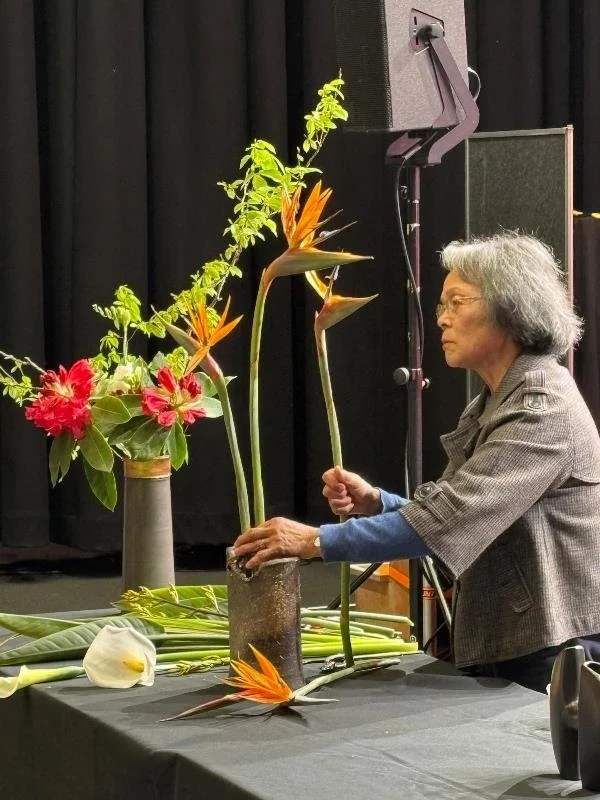
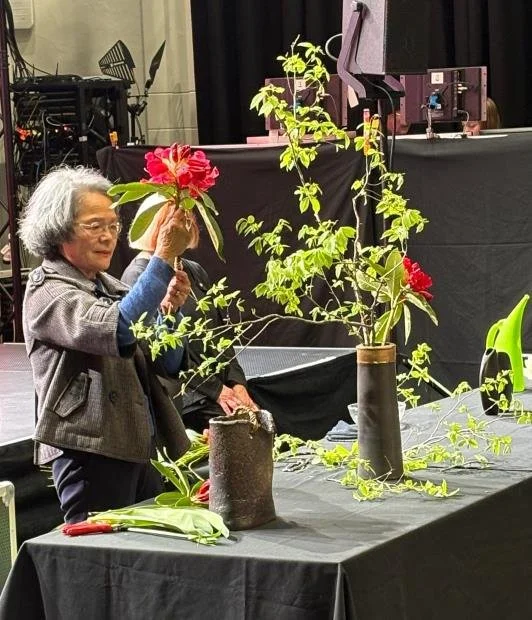
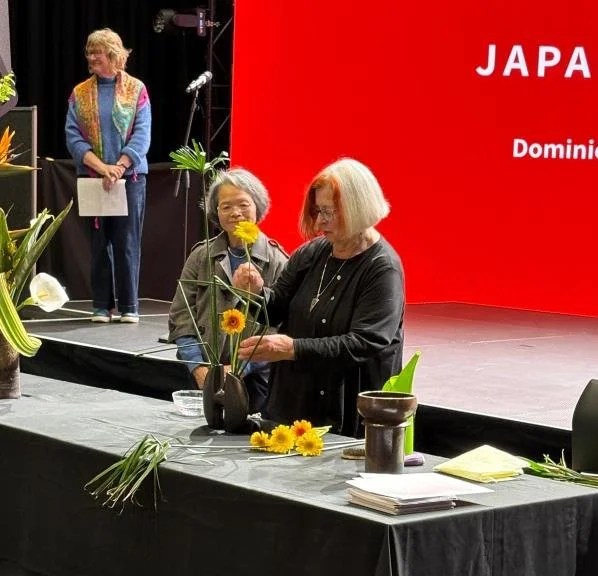
The Embassy of Japan hosted this festival on Sunday 18th October at the Dominion Museum, Massey University, Wellington. Helen Wareham and Masako Crawford, members of Ikebana Wellington did a demonstration with commentary by Penny Kennett.
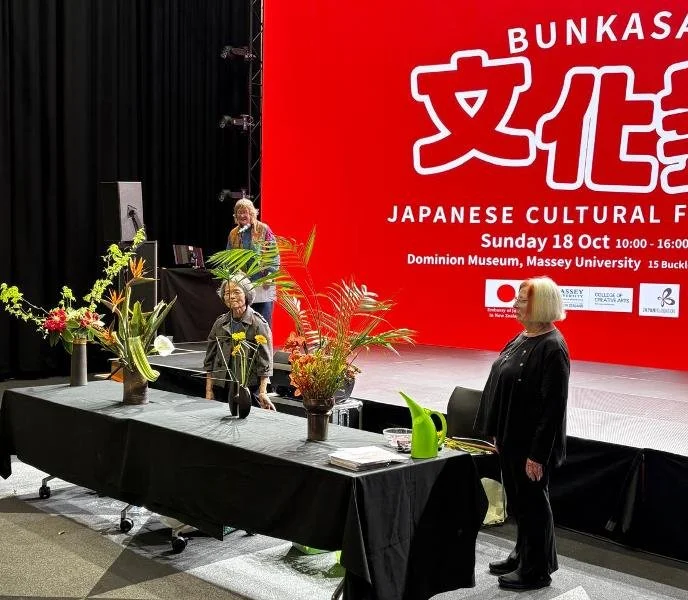
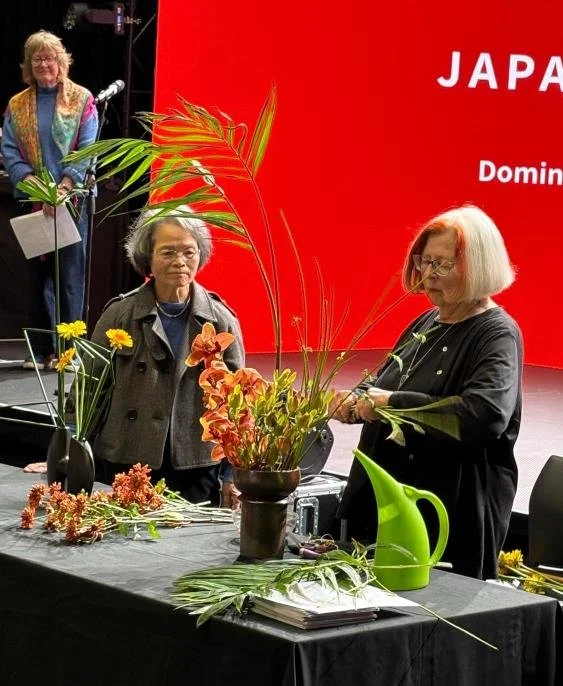
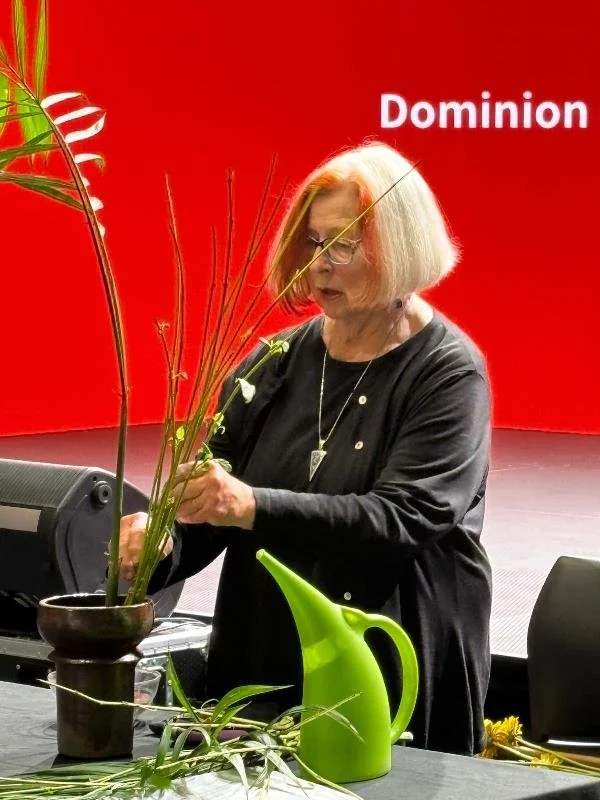
Ikebana Demonstration
An introduction to the Japanese art of flower arrangement
Ikebana is the Japanese art of arranging flowers, branches, leaves and other natural materials. Rather than focusing only on abundance or symmetry, Ikebana draws attention to line, space, balance and the individual character of each material. Every arrangement is a thoughtful composition that reflects both nature and the maker’s intention.
What makes Ikebana distinctive?
Line: Stems and branches create movement, direction and structure.
Space: Empty space is an active part of the design, giving each element room to be seen.
Asymmetry: Natural, uneven balance often replaces formal symmetry.
Seasonality: Materials are selected to express the character of a particular time of year.
Harmony: The container, materials and surroundings are considered as one composition.
Our Ikebanists
Ikebana teachers Masako Crawford and Helen Wareham will each demonstrate an ikebana arrangement. Helen and Masako have studied for many years and have learnt a modern school of ikebana, the Sogetsu School founded in Tokyo in 1927.
What you will see
During the demonstration, Masako and Helen will construct their arrangement from the back of the ikebana so you can see the view from the front. They will select and prepare their materials, establish the main lines of the composition, and refine the relationship between form and open space. You may see stems trimmed, bent or repositioned several times. These deliberate adjustments reveal how a simple group of materials can develop into a balanced and expressive arrangement.
As you watch
Notice how the arrangement changes from different viewpoints. Look for the direction of the main lines, the use of negative space, the relationship between the materials and the container, and the way seasonal qualities are expressed. Questions are welcome at the end, or you can talk to our ikebanists after the demonstration.
Ikebana invites us to slow down, observe closely and appreciate the beauty of natural form.
Masako’s Arrangements
1. Masako has prepared an arrangement in a vase by wellington potter, Rayburn Laird. Her theme is the Beauty of Spring in a freestyle ikebana. Her materials are Red Rhododendron, Beech wood, Rengarenga lilies, freesia and azalea.
2. Masako is arranging this ikebana using bird of paradise flowers and leaves from her daughter’s garden, with New Zealand flax.
Helen’s Arrangements
1. Helen’s first arrangement is a simple ikebana emphasising straight lines and repeating shapes. She is using long pieces of umbrella grass from her garden and inserting them at angles to use both openings in the black vase. This container is from Japan. Although the attention is on the lines, she has added some bright gerberas for a colour contrast.
2. Helen’s second arrangement is in a pottery container made by Wellington potter, Davina Routledge. She is arranging Mexican bamboo palm (also from her garden) with materials from the supermarket, an orchid, spray chrysanthemums, green cornus stems and some leucadendron. This ikebana is focussing on the mixture of colours.
Conclusion
Thank you for watching our demonstration. If you would like to know more about ikebana talk to one of us or have a look at our website – Ikebana Wellington.